
Boeing: Revenue Is Back. Can Margins and Cash Flow Follow?
Demand has recovered. Boeing’s next challenge is turning that scale into healthier margins and fewer program losses.
At a glance
What the last 5 years of data say about Boeing’s turnaround:
- Sales aren’t the problem. Commercial Airplanes is still losing money on the planes it builds.
- Defense is busy but barely profitable, weighed down by legacy fixed-price programs.
- Positioning is mixed: institutions are adding, insiders are net sellers, and options traders are hedging.
- Valuation is wide because almost all of it rides on execution.
1. Revenue is back. Profitability is not.
Boeing’s latest annual revenue is about $94B, but Commercial Airplanes is operating near a −15.6% margin, versus roughly +10.6% in 2018. The company also burned $14.3B of free cash flow over the year.
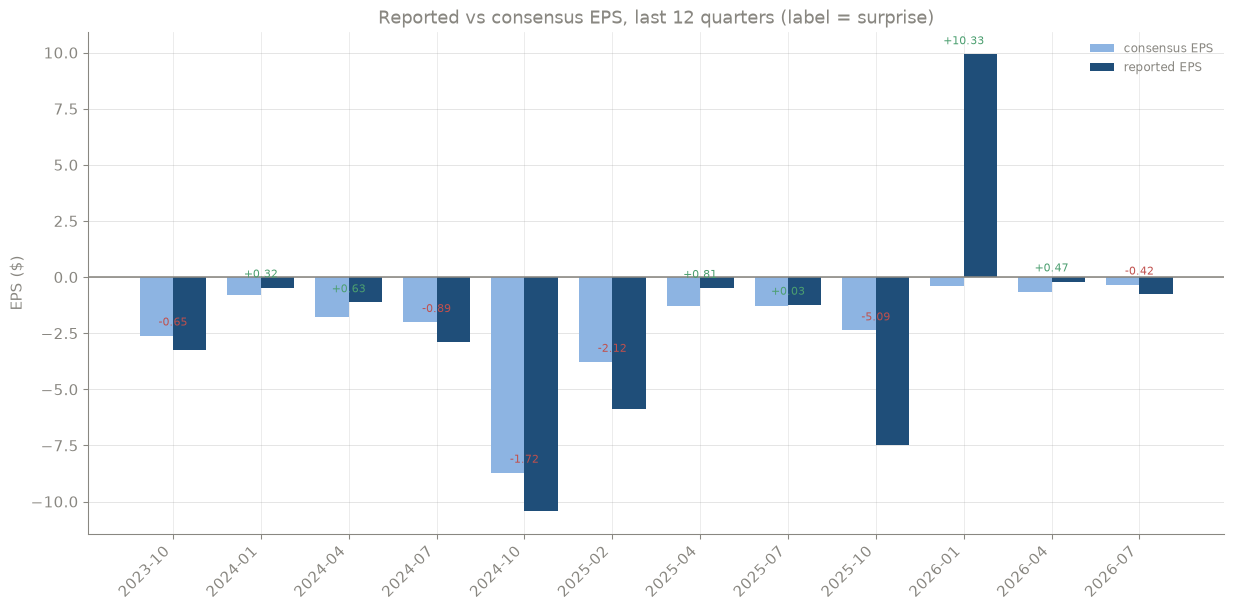
Boeing doesn’t mainly need more orders. It needs to build and deliver aircraft profitably again. That’s why EPS, negative in almost every recent quarter, isn’t where progress shows up first. Investors watch deliveries, production rates and margins instead.
Figure 1
2. Defense: steady demand, weak economics
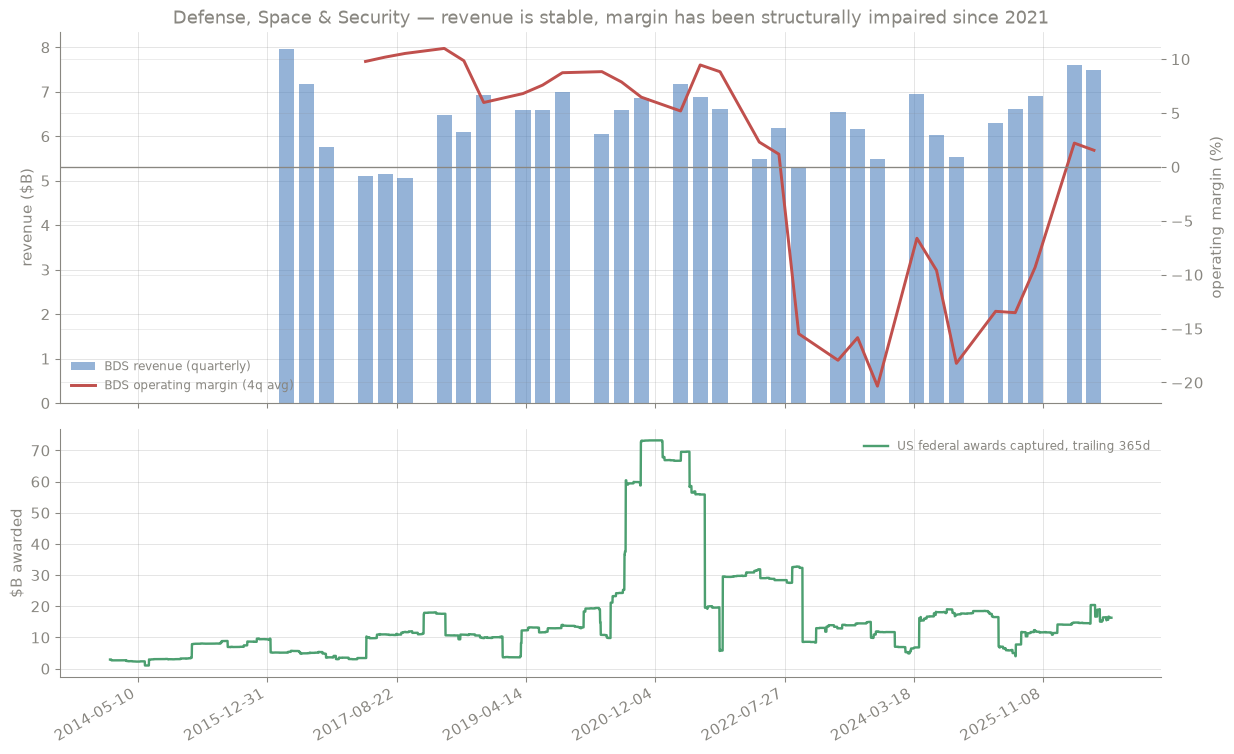
Defense brings in roughly $7.48B per quarter, but its four-quarter operating margin is only about 1.5%. Legacy fixed-price contracts leave Boeing on the hook for cost overruns, so improvement depends on fewer program charges, not more wins.
The main pressure points: KC-46A, T-7A, VC-25B / Air Force One and Starliner.
Figure 4
3. Positioning: who’s buying, who’s hedging
- Institutions are adding. The latest 13F snapshot shows about $141B held across 2,634 filers, with more new positions opened than closed. 13Fs are delayed, so treat this as a snapshot.
- Insiders are net sellers. Since 2021, about $6.62M of open-market purchases against $20.65M of sales.
- Shorts are light. Short interest is about 1.9% of shares outstanding, with 2.9 days to cover, so there’s little fuel for a squeeze.
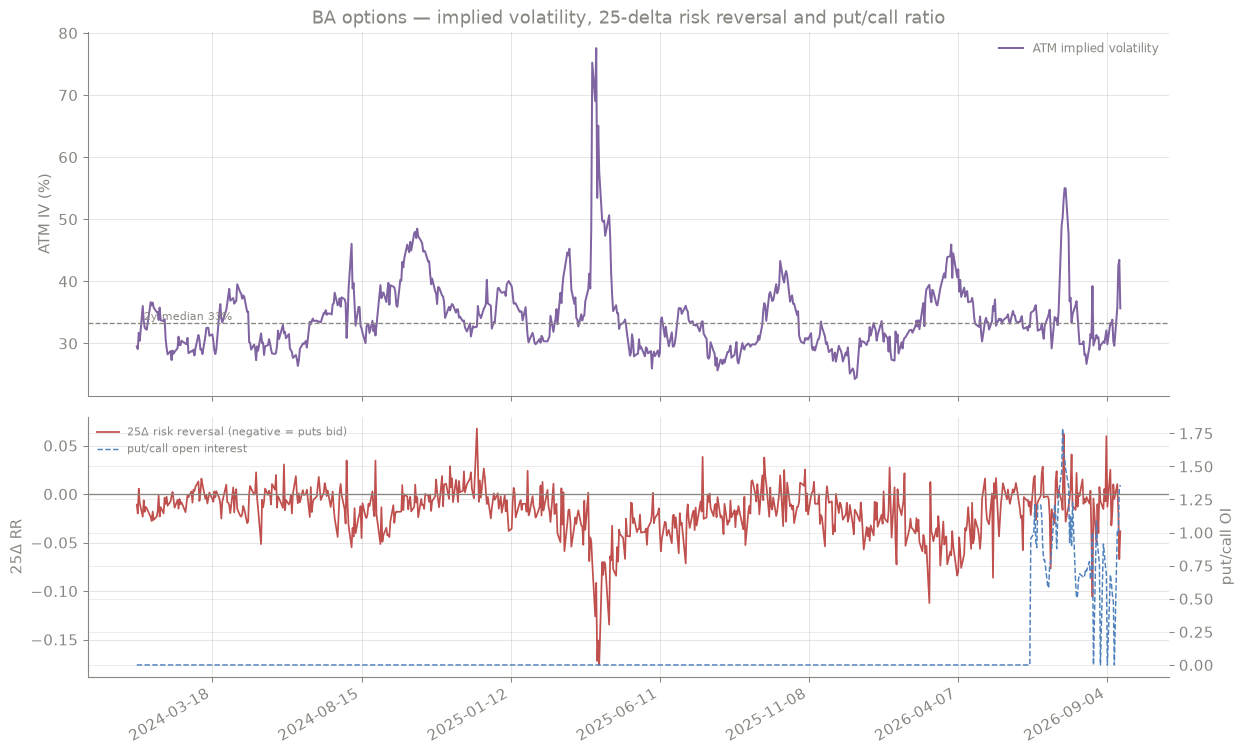
- Options traders are defensive. Heavier put positioning and negative dealer gamma point to demand for protection and room for bigger swings.
Figure 7
4. Valuation: a wide range
Starting from roughly $199B of enterprise value, the scenarios spread widely because Boeing’s value depends on execution, not on revenue growth.
Figure 10
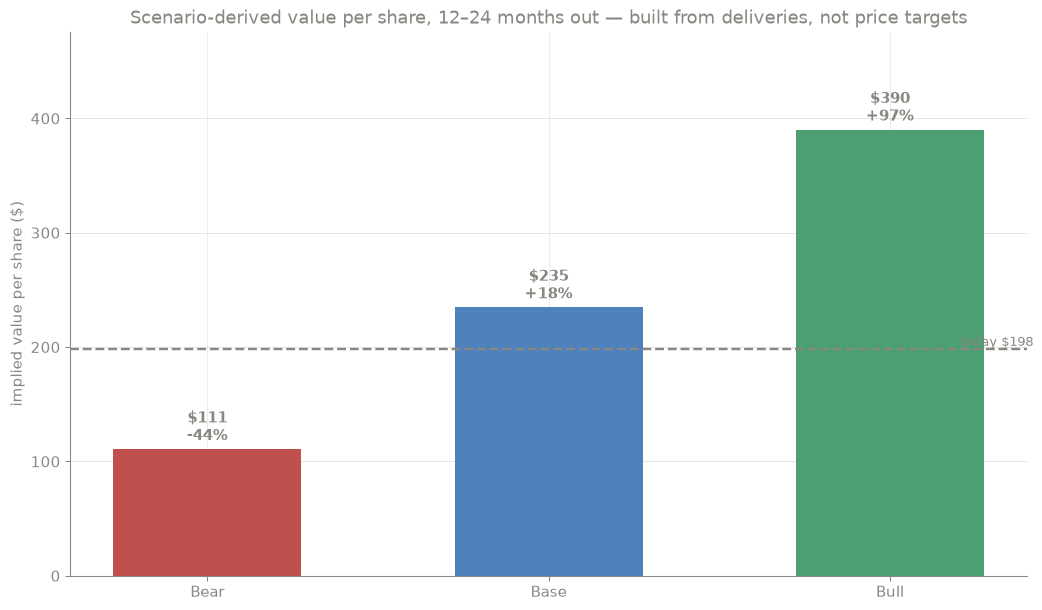
Bull case: $390 per share
Higher production, smoother deliveries, better quality control, a successful integration of Spirit AeroSystems (its main fuselage supplier), fewer defense charges, and ~$12.5B of annual free cash flow.
Base case: $235 per share
Meaningful operational improvement, but not a full return to historical economics.
Bear case: $111 per share
The turnaround stays incomplete, and weak margins keep holding the equity back.
The weighted scenario return is about +22%, but the Bull case pulls that up, so don’t read it as a price target. The available analyst targets average about $218, close to the base case, but they come from only two ratings, too few to count as Street consensus.
5. What to watch
- Commercial Airplanes operating margin: planes need to make money again.
- Quarterly free cash flow: operating progress has to show up as cash.
- 737 and 787 production and deliveries: output up, without sacrificing quality.
- Defense program charges: legacy losses need to keep shrinking.
- Net debt: the balance sheet needs to start repairing.
Bottom line
Boeing is an execution story. If higher production shows up in the five metrics above, the valuation has room to improve. If it doesn’t, revenue growth alone won’t finish the turnaround.
Revenue has come back. Now Boeing has to prove the profits can come back with it.
Sigmo can make mistakes — verify important info. Not financial advice.
Get AlphaWeekly in your inbox
Free. New issues as they are published, with the charts and the method in view.